Last Call Confessions: One Year of Being the Bar's Final Customer
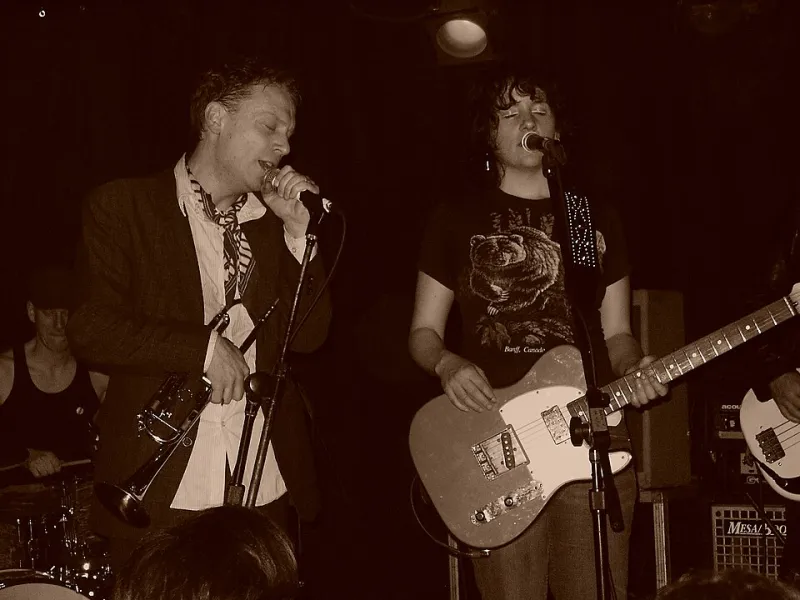
Photo: Codo, CC BY-SA 2.0, via Wikimedia Commons
It started innocently enough. I'd moved to a new neighborhood, didn't know anyone, and the bar on the corner had the kind of worn wooden counter that seemed to invite loitering. I'd stop in after work, and work kept running later, and eventually I noticed a pattern: I was almost always the last one there. For a full year, I was the person the bartender exchanged a meaningful glance with at closing time — the universal signal that says you can start stacking glasses now, I won't be offended.
What I learned in that year is hard to explain to people who experience bars the way most people do: as a stop on the way to somewhere else. Being a closing-time regular is something else entirely. It's a role. And it turns out the role comes with an education.
The Economics of Staying Late
The late-night bar operates on a different social contract than the happy-hour crowd. Day drinkers are performing. The after-work crowd is decompressing. But the people who stay until the lights come up — we're not there for the drinks. The drinks are a cover story. We're there because the bar is the only room in our lives with no agenda.
There's a specific honesty that emerges after midnight. Conversations at the rail have no small talk ceiling. I've heard about divorces, deportations, lottery tickets, and one man's 40-year feud with his brother over a lawnmower. Nobody plans these conversations. They happen because the room permits them.
The Staff Are the Real Regulars
Here's what nobody tells you: the regulars rotate. Jobs change, people move, relationships end. But the bartender? The bartender is the permanent population of the bar. And when you're a closing-time regular, you develop a relationship with the staff that doesn't fit neatly into any category — not friendship exactly, not service, something adjacent to both.
My bartender, Dana, knew the shape of my week better than my own family did. She knew which days were good days and which ones required no questions. In return, I learned about her nursing school exams, her kid, the reasons she kept picking up extra shifts. This is the transaction at the heart of the late-night bar: presence for presence. No one's keeping score, but everyone's keeping count.
The Second Family Nobody Planned
Over that year, the bar's closing crew became a loose, unplanned family. The bouncer who walked me to my car on the slow nights. The cook who'd make off-menu food for the stragglers. The other regulars — a retired mailman, a nurse coming off night shifts, a guy who swore he was "almost done" with his dissertation for three consecutive years.
None of us would have chosen each other in any other context. Our ages spanned four decades. Our politics would have ended a dinner party. But at the rail, from 11 p.m. to close, we were a functioning community — one that checked in when someone went quiet, that noticed absences, that showed up when one of us landed in the hospital.
The Disappearing Room
I'd love to tell you this was a uniquely magical bar. It wasn't. It was a perfectly ordinary neighborhood bar, which is precisely the point. Rooms like it exist in every American city and town, and they're vanishing.
Sociologists talk about "third places" — the spaces that aren't home and aren't work, where community actually happens. By nearly every measure, we're losing them. Malls gave way to e-commerce, coffee shops fill with laptops and headphones, and the pandemic normalized a life that moves from apartment to office and back again. Church membership, club membership, league bowling — the connective tissue of American life has been thinning for decades.
The late-night bar is one of the last places where a stranger can become a fixture simply by showing up. No membership fee. No application. No algorithm curating who belongs. You sit down, you come back, and one day the bartender starts your drink when you walk in. Congratulations — you have a place.
What I'd Tell My Year-Ago Self
If I could go back to that first lonely night at the corner bar, I'd tell myself this: you're not killing time. You're building something. It won't look like friendship on a schedule or community on a spreadsheet, but it will be real — real enough that when I finally moved away, the whole closing crew threw me an impromptu going-away toast at 1:45 a.m., last call be damned.
The crowds will always have their nightclubs and their rooftops. But the soul of American nightlife lives at the end of the evening, in the quiet stretch before the lights come up — where the bartender knows your order, the stranger knows your story, and nobody, for one last hour, has anywhere else to be.
Get out there and be somebody's last customer. Trust me. It's worth it.