After Dark, the Screen Comes Alive: Inside America's Last Midnight Movie Rituals
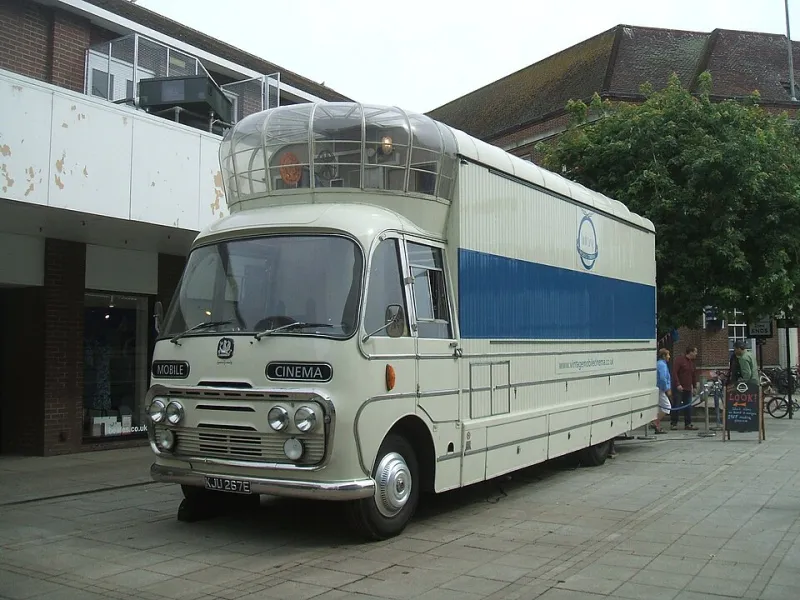
Photo: John M , CC BY-SA 2.0, via Wikimedia Commons
There's a moment at the Naro Expanded Cinema in Norfolk, Virginia, around 11:52 on a Saturday night, when the lobby smells like hairspray and rice. People are lining up at the concession stand in fishnets and lab coats, arguing about which showing of The Rocky Horror Picture Show is the correct one. (There is no correct one. There is only theirs.) The marquee outside glows against the dark, and for a second, you could be in 1979.
This is the midnight movie — a tradition that, by every reasonable business metric, should have died sometime around the invention of the VCR. It did not. It just moved to the margins.
The 7 P.M. Audience Will Never Understand
Here's the thing about watching a movie at midnight: you've already made three decisions to be there. You didn't drift in after dinner. You drove across town, changed clothes, told your group chat you'd "probably be home by 2." The film has to earn that. And the films that survive as midnight fare — Rocky Horror, Tommy Wiseau's catastrophic The Room, Big Lebowski repertory runs, the annual Room tours — have something in common. They don't work as passive viewing.
"A 7 p.m. crowd watches a movie," says Dana, who has run midnight programming at a two-screen theater in western Massachusetts for eleven years. "A midnight crowd performs it. They answer back. They've memorized the flaws. The flaws are the point."
That's the paradox at the heart of the tradition: midnight movies aren't good films, necessarily. They're good rooms. The Room is unwatchable alone on a Tuesday afternoon. With 300 people shouting "You're tearing me apart!" and hurling plastic spoons at the screen, it's communal comedy with the best laugh track ever assembled — the audience itself.
The Shadow Cast Problem
Ask anyone who runs these screenings what keeps them alive and you'll hear the same phrase: the shadow cast. These are the amateur troupes who mime the film in front of the screen, costume by costume, scene by scene, at every Rocky Horror showing in the country. They rehearse. They recruit. They argue about blocking.
Most lose money. Several have dissolved and reformed under new names like garage bands. And they are, functionally, the reason the tradition exists — a volunteer labor force that turns a screening into an event.
"We've had people drive four hours from Ohio," says a cast member at a Columbus theater, backstage with glitter on her cheekbones. "For a movie they own on Blu-ray. You don't drive four hours for a Blu-ray. You drive four hours for the room."
The Economics of Stubbornness
The theater owners who keep midnight slots alive are, almost universally, losing the argument with their accountants. A midnight screening means overtime for staff, a late license in some states, and a demographic that buys concessions in small quantities and loud quantities.
So why do it? For single-screen and independent houses, the answer is survival through identity. A midnight series gives a theater a reason to be a place rather than a screen. The Naro, the Music Box in Chicago, the Vista in Los Angeles, the Brattle in Cambridge — these theaters have all built late-night programming into their DNA, and it pays off in the thing that can't be measured quarterly: a sense that the building belongs to someone.
There's also a quieter shift happening. As repertory cinema migrates to streaming, the midnight screening has become one of the last places where watching a movie is a public act. You can't pause it. You can't check your phone without someone shushing you with a line from the film. It's the theatrical equivalent of a house show.
What the Dark Gives You
Spend enough weekends in these rooms and you start to understand what the midnight crowd gets that the matinee never will. It's not the movie. It's permission.
At 7 p.m., you're a customer. At midnight, you're a co-conspirator. The lights go down on a room full of people who chose the strange option, and for ninety minutes, everyone in the theater is in on the same joke, the same ritual, the same slightly transgressive feeling of being awake when you're supposed to be asleep.
One projectionist in Portland put it best while threading the last reel of a Saturday night: "Daylight movies are about the film. Midnight movies are about who shows up."
The lights dim. The rice flies. Somewhere in the back, someone is seeing it for the first time, and the room — that's the real feature — takes care of the rest.