Behind the Door with the Felt Pen: How Private-Room Karaoke Rewired the American Night
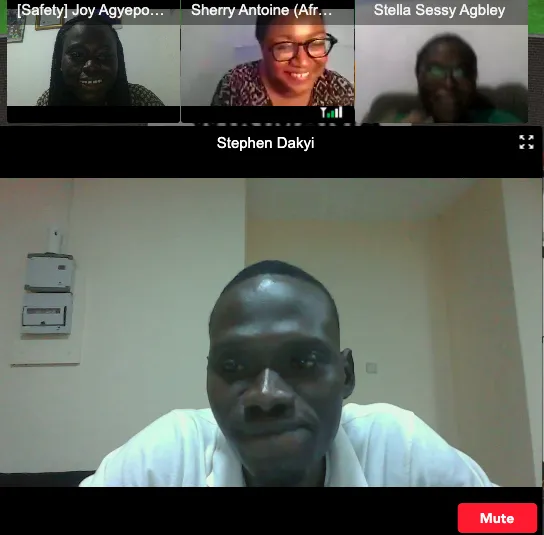
Photo: Joy Agyepong, CC BY-SA 4.0, via Wikimedia Commons
There's a door on a second floor in Flushing, Queens, that doesn't look like much. Behind it: eight rooms, a call button, a laminated menu of soju-yogurt cocktails, and a felt-tip pen for writing your name on the song slip like it's 1997. By midnight, every room is full. By 1 a.m., the hallway sounds like a chorus of mismatched anthems bleeding through drywall — someone's Whitney colliding with someone's Linkin Park, and nobody cares.
This is the private-room karaoke economy, and it has quietly become one of the most reliable late-night businesses in America.
The Room Is the Point
Ask Min-jae Park, who opened his first noraebang-style lounge outside Atlanta in 2016 and now runs three, what he's actually selling, and he doesn't hesitate. "Not music. The door."
American bar karaoke — the open-mic, sticky-floor, whole-room-watching format — has always demanded a specific kind of courage. Private rooms remove the audience and, strangely, that's what makes people sing. Park says his busiest hours are 12:30 to 2 a.m., long past the point where most bars are flipping chairs onto tables. "People don't want the night to be watched. They want it to be theirs."
What Last Call Does to a Person
There's a psychological thread running through all of this, and Dr. Elena Ruiz, a social psychologist who studies group behavior, describes it plainly: alcohol lowers the cost of embarrassment faster than it lowers the desire to be seen. "By 1 a.m., the self-monitoring system that usually runs the show is tired," she says. "What's left is the part of us that wants to belong to the room."
That's the karaoke dilemma in miniature. Americans, culturally speaking, are trained to perform carefully — rehearsed karaoke, karaoke as audition. But at a certain hour, the performance requirement dissolves. The waitress who came in after her shift does a note-perfect "Jolene." The finance guy who's been quiet all night bellows Bon Jovi with his eyes closed. Strangers harmonize on the chorus because at that hour, harmonizing with strangers seems not only acceptable but obvious.
A Survival Guide for the Uninitiated
If you're going to do it right, a few ground rules from the people who work these rooms:
- Bring a group, not a crowd. Rooms hold six to fifteen comfortably. Fifteen becomes a subway car with a mic.
- Order the fruit plate. Every owner mentioned it. Nobody knows why it works, but it does.
- The second hour is the real one. The first hour is warm-up and embarrassment. The second is where the night actually happens.
- Learn the call button. It's not just for drinks. It's a panic button for when the song queue dies.
Why This, Why Now
Part of the boom is demographic — the Korean and Japanese karaoke model migrating west coast to east, from Los Angeles's Koreatown to a converted bank building in Chicago's Avondale. Part of it is economic: private rooms monetize square footage all night, in an industry desperate for late-night revenue. And part of it is something harder to name.
We live in an era where everything is recorded, posted, and scored. The karaoke room is one of the last spaces in American nightlife that is deliberately, structurally un-documentable. No stage, no crowd, no camera-friendly moment. Just a door, a touchscreen, and a group of people discovering that 1 a.m. is the only time of day nobody's watching.
Park puts it best as he's restocking the soju at closing: "People come in shy and leave loud. Every night. Best business in the world."