Nails at 3 A.M.: The Quiet Economy of After-Hours Beauty
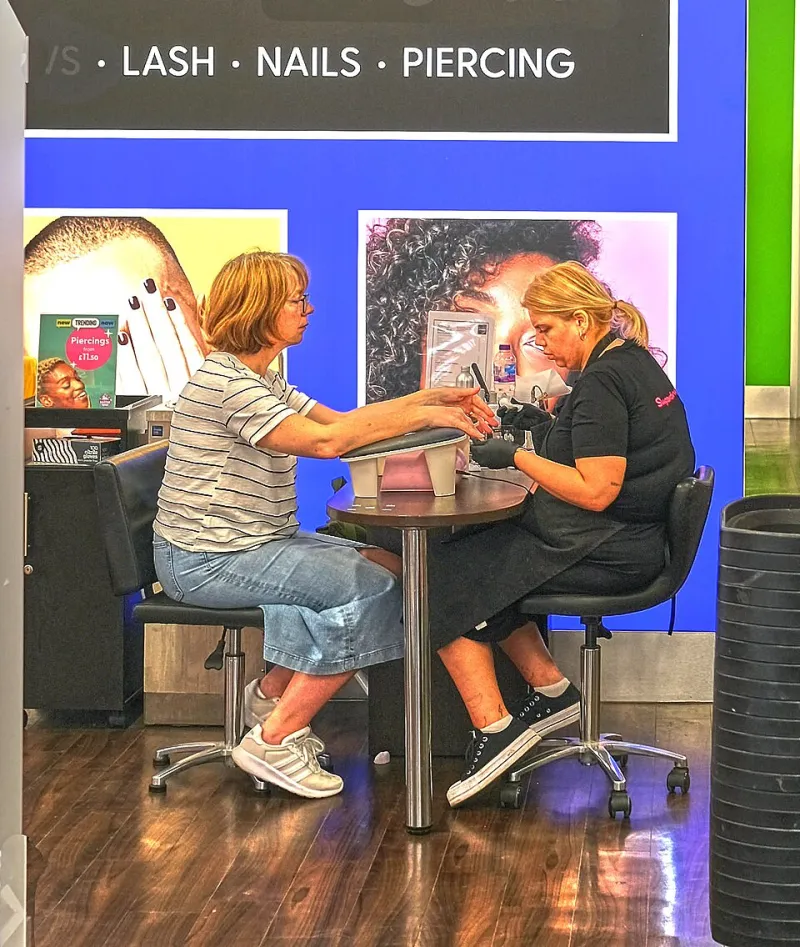
Photo: Anthony O'Neil , CC BY-SA 2.0, via Wikimedia Commons
The sign on the strip mall window said OPEN 24 HOURS, and I assumed it was a lie. Nobody opens a nail salon at 2:40 in the morning. But the door buzzed, the fluorescent lights hummed, and a woman named Vy waved me in without looking up from the footbath she was already working on.
It was 2:47 a.m. in Las Vegas, and I was about to get the most instructive manicure of my life.
The Clientele That Only Exists at Night
Vy's regulars don't book appointments. They wander in when their lives let them. The cocktail waitress getting her fill redone after her shift ends at 3. The dealer who sleeps at noon and wakes at midnight. The bachelorette party stragglers whose nails gave up somewhere around the third bar. And the insomniacs — always the insomniacs — who've learned that a 3 a.m. salon is the closest thing this city has to a church that never closes.
"Daytime customers want to be in and out," Vy told me, filing away with the unhurried rhythm of someone who has done maybe 40,000 of these. "Nighttime customers want to talk. Or they want to sit in silence. Either is fine. I'm here."
That's the thing about the midnight beauty economy: it runs on a different emotional currency. The daytime salon is errand-like, transactional, squeezed between obligations. The after-hours salon is a refuge. Nobody's in a hurry because nobody has anywhere else to be — that's why they're here.
Vegas, Miami, New York: Three Cities, One Midnight Trade
Every late-night city has its own version of this economy. In Las Vegas, it's structural. The entire hospitality workforce works a schedule inverted from the rest of America, so the services follow. Salons near the east side of the Strip stay open until the casinos thin out. Barbers keep chairs lit for show performers finishing at 1 a.m. who need to look camera-ready again by the next show.
Miami runs on a different logic: vanity as nightlife. In Wynwood and South Beach, mobile nail techs run an entire shadow business out of Instagram DMs. A tech I'll call Dani — she asked me not to use her salon name because she takes clients "off the books" — does house calls for music video shoots, club promoters, and bridesmaids whose weddings start at 11 a.m. and whose rehearsals ended at 2. "Nobody in Miami gets ready during the day," she laughed. "Getting ready IS the night."
New York's version is the most invisible and maybe the most tender. The 24-hour nail spots in Chinatown and the after-midnight barbershops in Washington Heights serve a patchwork of night nurses coming off shift at Mount Sinai, kitchen workers, drag performers, and strangers who just can't sleep. In a city that monetizes every hour, these shops feel almost defiantly unglamorous — linoleum floors, a space heater, a TV playing telenovelas at low volume.
Why Beauty Can't Wait for Morning
We tend to think of grooming as a daytime activity — something you do in preparation for a life that happens between 8 and 6. But a huge slice of working America lives inverted. Roughly 15% of the workforce does something other than a standard day shift. For a nurse, a bartender, an exotic dancer, a line cook, or a long-haul driver, "book an appointment after work" means booking it at midnight.
And then there's the other category: the people for whom the appointment isn't about work at all. The 3 a.m. customer isn't preparing for anything. She's coping. There's something about having your hands tended to in the smallest hours that has nothing to do with gel polish. It's a controlled, gentle, one-hour guarantee that the world will slow down and touch you kindly.
Vy put it better than I could. "Daytime, people get nails for other people to look at. Nighttime, people get nails so they feel like a person again."
The Economics of Staying Open
It's worth saying plainly: nobody runs a 24-hour salon because it's lucrative. The midnight hours are thin. What keeps these shops open is a mix of rent that's already being paid, immigrant-owned businesses where family members split shifts, and the loyalty of a clientele that has nowhere else to go. The night shift regulars tip better, too — they know what it means that anyone showed up for them.
The mobile techs have it slightly easier. No overhead, no security concerns about a dark storefront, just a kit bag and a car. But they also absorb all the risk — the no-shows at 1 a.m., the addresses in unfamiliar neighborhoods, the Venmo payments that never arrive.
What I Took Home, Besides the Manicure
I left Vy's shop at 4:15 a.m. with a set I didn't need and a new understanding of what "service industry" actually means. We write constantly about the people who feed the night — the cooks, the bartenders, the drivers. We write far less about the people who make the night's workers feel human while they do it.
Somewhere in your city right now, there's a lit storefront or a tech answering DMs at an hour you assumed was dead. The manicure economy doesn't sleep because the rest of us don't either. Somebody has to be awake for that. It might as well be someone with a UV lamp and an unshakable belief that nobody's too broken at 3 a.m. to leave with a fresh set.