The Dopamine Stroll: How Midnight Became America's Favorite Therapy
Photo: Acabashi, CC BY-SA 4.0, via Wikimedia Commons
Somewhere between the rise of the 5 a.m. cold plunge and the decline of the group hangout, Americans found a new wellness ritual: the midnight walk. No podcast, no step counter, no destination. Just you, the streetlights, and a city that's finally stopped performing.
Ask around and you'll hear the same confession in every accent. "I don't tell people I do it." "It's the only time my brain shuts up." "It's like the city is mine for a few hours." The midnight stroll has become the least Instagrammed self-care trend in America, which is precisely why it works.
The City After Last Call Hits Different
There's a scientific-sounding explanation people love to throw around — the so-called "dopamine stroll," the idea that low-stimulation environments let your reward system finally exhale. Whether or not the neuroscience holds up, the felt experience is undeniable. During the day, the city demands things from you: cross faster, answer that, be somebody. After midnight, it stops asking.
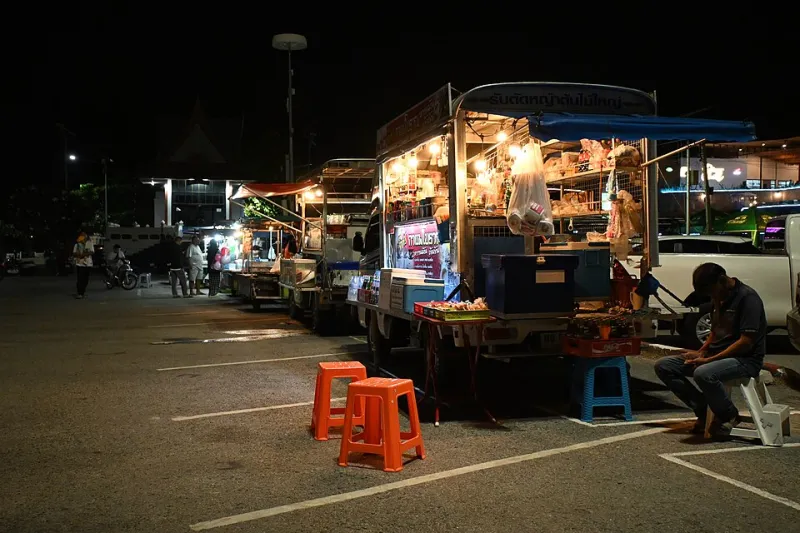
The neon is still on but nobody's watching. The restaurants are down to their last tables. In New York, the stoop sitters come out — people who live in apartments the size of parking spaces, claiming a stretch of brownstone steps like it's beachfront property. In Los Angeles, the ritual is automotive: the destinationless drive, windows down on the 110 at 1 a.m., the city spread out like a screensaver you can actually drive through.
Chicago has its lakefront insomniacs. Portland has its 24-hour diners full of people nursing coffee and notebooks. Every American city has a version of this, and everyone who does it describes the same thing: the feeling of being alone in public without being lonely.
The Complicated Part
Here's where the trend gets honest with itself. The midnight walk isn't equally available to everyone, and pretending otherwise is naive. Neighborhood safety shapes who gets to wander. A 1 a.m. stroll means very different things on different blocks, in different bodies, in different cities. For some people, post-midnight streets are a sanctuary. For others, they're a risk calculation.
The rise of the midnight stroll also says something slightly melancholy about us. Plenty of the people I talked to admitted they walk at night because it's the only unstructured time they have — the hours between the second job and the first alarm. Self-care and exhaustion are tangled together in ways no wellness brand wants to admit.
A Screensaver for the Soul
Still, I keep coming back to why the trend is growing instead of shrinking. The screen is the obvious villain. We spend our days looking at glowing rectangles that show us other people's lives. The midnight city is a glowing rectangle you can walk through — one that asks nothing, scrolls nothing, and never refreshes.
There's a reason people describe the post-midnight streetscape in almost romantic terms. The wet asphalt catching a traffic light. A lone bodega cat supervising the sidewalk. The diner window at 2 a.m. with one person inside, eating pie like it's a scene from a movie. These images stick because they're rare, and they're rare because almost everyone else is asleep.
So if you've been feeling like your self-care routine is just another chore — another app, another subscription, another thing to optimize — consider the walk. No gear, no goal, no streak to maintain. Just pick a night, pick a neighborhood, and see what the city looks like when it thinks nobody's watching.
The city keeps the light on for you. All you have to do is show up after midnight.