The Outfit You Only Wear After Dark
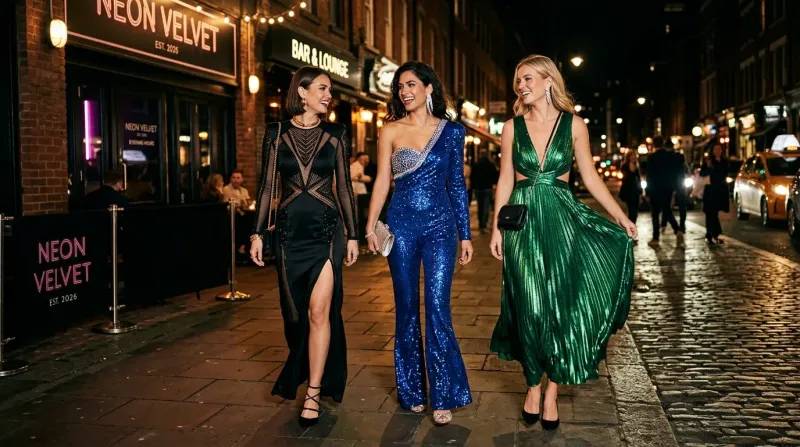
Photo: stylish friends getting ready for night out, city apartment evening, glamorous outfits, via yourselflovehub.com
Somewhere in your closet right now, there's an outfit that only exists at night. It doesn't go to brunch. It doesn't go to the office. It has never seen daylight, and honestly, it might fall apart if it did.
We all know this garment. We all, on some level, believe in it. And the strange thing is that nobody ever talks about why.
Daylight Clothes Are a Résumé. Night Clothes Are a Plot.
Daytime dressing in America is fundamentally transactional. We dress for the meeting, the errand, the in-laws. Even our most expressive daytime fits are usually answering a question: Who am I and how should I treat me? It's self-presentation as résumé.
After midnight, the question changes. Night clothes don't answer who you are — they propose who you might become. That's the whole engine behind the classic American night-out ritual: the shower, the playlist, the outfit that took forty-five minutes and three group-chat polls. You're not getting dressed. You're casting yourself in a role for the evening.
This is why the same person can wear nearly identical jeans and a tee all week and feel like a completely different human the moment they swap in the good jacket and the shoes that hurt. The costume isn't vanity. It's permission.
The Old Rules: Shiny, Tight, and Slightly Reckless
For decades, American nightlife dress codes ran on a simple logic: nighttime is the inverse of daytime. Office meant muted; after dark meant shine. Comfort was for the weak. Heels were architecture. A man in a plain black button-down at a nightclub was participating in a national uniform as old as Studio 54 and as recent as last Friday in Miami.
The signal was clear: I chose to be here. I spent effort on this. I am not the version of me from this morning. Whether you were in a Chicago wine bar or an LA rooftop, the clothes said you crossed a threshold.
The Great Comfort Inversion
Then the pandemic happened, and nightlife fashion did something nobody predicted. It didn't get dressier when doors reopened. It got realer.
Post-2020, the after-midnight uniform started absorbing daytime comfort — the good sneakers, the soft tailoring, the fabrics that move. But here's the interesting part: the meaning didn't dilute. A perfectly broken-in pair of sneakers at a Brooklyn listening bar now signals exactly what six-inch heels once did: I belong here, and I'm not performing for anyone.
Comfort became its own flex. The most fashionable person in the room is often the one who looks like they got dressed in ninety seconds — a look that, naturally, takes enormous effort to pull off. The threshold-crossing signal survived; it just changed its costume.
What We're Actually Saying
Strip away the specifics and late-night style in America communicates three things daytime clothes rarely can:
- Belonging. Nightlife fashion is tribal. The vintage denim at a honky-tonk, the all-black at a techno night, the logo tee at the dive — these are membership cards you wear.
- Reinvention. Every night out is a soft reboot. The outfit is the declaration that today's version of you is not binding.
- Freedom. Daylight has stakeholders — bosses, coworkers, algorithms. The night, at least in theory, doesn't. Dressing for it is one of the last low-stakes acts of self-authorship we have.
Own the Hour
None of this requires a stylist or a budget. It requires intention — the small, almost ceremonial decision that this evening is an occasion, even if the occasion is just nachos and a friend's new single at 1 a.m.
Because that's the real secret of after-dark dressing in America. It was never about the clothes. It's about the quiet, ridiculous, wonderful belief that the person you are at midnight might be the truest one. Dress accordingly.