Static, Coffee, and a Voice: The People Who Keep AM Radio Alive at 3 A.M.
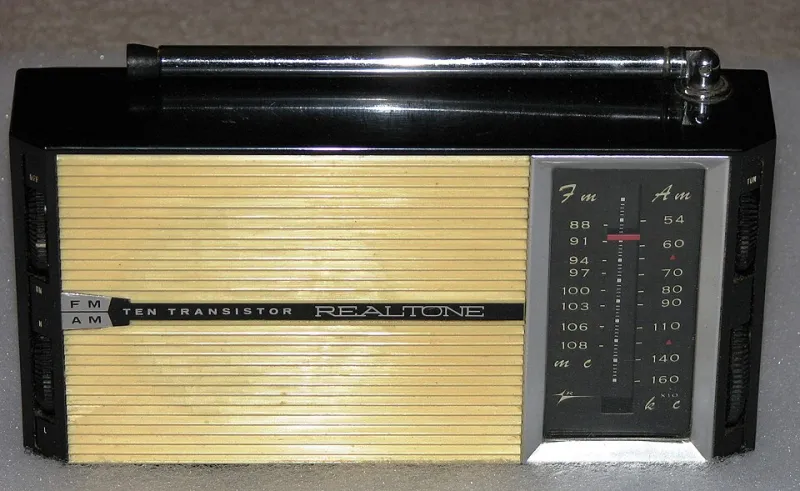
Photo: Joe Haupt from USA, CC BY-SA 2.0, via Wikimedia Commons
The first thing you notice is the hiss. That soft, analog static underneath every word, like the broadcast is breathing. The second thing you notice is that someone is talking to you — actually to you — at 3:07 on a Tuesday morning, and there is no algorithm anywhere in the room.
I found it by accident, the way most people do. Driving home from a bad date outside Toledo, scanning the dial because the podcast queue felt too heavy, and landing on a man named Ray who wanted to know whether anyone else had ever loved a dog more than most people. A trucker called in from I-80. A nurse called in from a break room in Dayton. Nobody hung up. I didn't either. I sat in my parked car until the sun came up.
The Economics of Nobody Listening
Overnight radio is, by every business metric, a rounding error. Arbitron stopped tracking it seriously years ago. Most stations run syndicated tape — Coast to Coast AM, reruns, satellite feeds. The ad rates are close to nothing. And yet, in markets large and small, a stubborn handful of live, local, overnight hosts still punch the board at midnight and talk until dawn.
They do it for salaries that would embarrass a barista. They do it because the station owner's grandfather promised the frequency would never go dark, or because the host owns the timeslot, or because — and this is the real answer — they can't imagine the alternative. "If I don't take the call," one host in rural Kansas told me, "that person is alone in a cab of a truck in Nebraska. I've been that person."
Who Calls In
The audience has a shape, and once you learn it, you can hear it in the first sentence of every call.
The drivers. Long-haul truckers, mostly, but also the late FedEx guy, the casino shuttle, the rideshare driver between airport runs. For them, the radio isn't entertainment — it's a co-pilot. The host's voice is the thing keeping their eyes open on a straight stretch of Nevada highway.
The night shift. Hospital workers, bakers, security guards, the third-shift crew I've written about before. They clock in when the rest of the country clocks out, and their break rooms are quiet in a way that can feel like drowning. A live voice, even a tinny one, is company.
The sleepless. The insomniacs, the grieving, the newly sober, the anxious at 4 A.M. when the world feels thinnest. They don't want content. They want contact.
What unites them is that streaming can't serve them. Not really. Spotify has millions of songs and not one of them knows you're awake. A podcast is a letter from the past. Overnight AM is a phone line that's actually ringing.
Low Tech, High Stakes
There's a beautiful jankiness to these broadcasts. Callers get cut off mid-sentence by a bad cell connection. The host reads the farm report off a piece of paper. Someone's ex-wife calls in. A regular named Big Mike calls every Thursday to give his picks, and every Thursday the host pretends not to have already heard them.
But don't mistake low production for low stakes. The conversations that happen in those hours are the ones people can't have in daylight. Callers talk about the daughter they haven't phoned back. The diagnosis. The fear that the whole thing — job, marriage, self — is coming apart. The host's job isn't to fix it. It's to say, on air, to a stranger: I hear you, man. That's real.
Try finding that in a feed. The feed doesn't hear you. The feed only watches.
Why It Survives
The cynical answer is that it survives because it's cheap — a host, a phone line, a transmitter. But cheap things die all the time in American media. The truer answer is that overnight radio occupies a niche no technology has managed to colonize: it is live, local, one-directional in reach but two-directional in feeling, and it demands nothing of you. No login. No subscription. No perfect playlist. You turn a dial and a human being is there.
There's also the matter of geography. Half the country still lives in places where the cell signal drops between towns and the FM dial is a wasteland of static. AM, with its long reach after dark — the signal literally bounces off the ionosphere at night — can carry a voice from Wichita to Wyoming. It's the only medium that works that way, and it works for free.
The Last Call
I asked Ray, my Toledo-insomnia discovery, how long he'd keep doing it. He laughed the laugh of a man who's been asked before. "Till they turn the transmitter off," he said. "And honestly, they'll probably forget to."
That's the quiet poetry of it. In an era where every corner of the night has been optimized, monetized, and pushed to your phone, there's still a strip of the dial where a person just talks to other people who can't sleep, and the static underneath it all sounds almost like breathing.
If you're ever awake at 3 A.M. — and statistically, some night, you will be — turn past the infomercials. Somewhere on that dial, somebody's waiting to take your call.